Skip to main content Skip to footer

Recovery After Transplant

Recovery After Transplant

Recovery After Transplant


After the donor’s organ is successfully transplanted and the surgery is completed, your body will slowly heal from the operation. Recovery time starts in the hospital, but will continue for a time after you are well enough to return home. You may find yourself adjusting mentally and emotionally to new habits or routines that come with life as a transplant recipient. While these changes may seem intimidating at first, overtime they will become an ordinary part of maintaining a healthy lifestyle. Your new life as a transplant recipient will not be a cure, but will be an opportunity to return to a better quality of life.

What to Expect


Your body will need time to adapt to physical changes after an organ transplant. The recovery time you can expect and the limitations you may still have will depend on the organ type and your medical situation. Each section below has more information specific to different organs.

You should expect to have frequent visits with your transplant team during recovery. You will have instructions for medications, diet, and other ways to stay healthy, and it will be very important to follow medical instructions from your doctors.

For many patients, an organ transplant is a life saving treatment. The time your transplant will last depends on many factors. The sections below will help you find more information about transplant outcomes.

Steps in the Journey


The information about each step in the journey may depend on the organ type. Expand the section for each organ type to see more details about recovery after transplant.

Surgical Recovery

Following your heart transplant, you will be monitored closely by your transplant care team. Some adjustments after transplantation will be permanent – you will need to take immunosuppressant medications for the rest of your life to prevent your body from rejecting the organ (graft), and you may need to adopt dietary restrictions. Other changes will be temporary, such as driving and weight lifting limitations, and needing a caretaker for a time after surgery. Your health care team will discuss these changes with you that are meant to increase the chances of graft survival.

Early Survival After Transplant

All transplant centers track the outcomes of transplant recipients in the first years following transplant. You will need to go back to your transplant center for regular check-ups at first, but these usually become less frequent overtime.

 Long-term Survival

Transplant centers may track the outcomes of transplant recipients for many years following transplant; however, as time passes, more patients may move to other areas and receive care at other centers. The center that performed the transplant may not be the center that provides long-term care for a recipient.

Surgical Recovery

Following your kidney transplant, you will be monitored closely by your transplant care team. Some adjustments after transplantation will be permanent – you will need to take immunosuppressant medications for the rest of your life to prevent your body from rejecting the organ (graft), and you may need to adopt dietary restrictions. Other changes will be temporary, such as driving and weight lifting limitations, and needing a caretaker for a time after surgery.  Your health care team will discuss these changes with you that are meant to increase the chances of graft survival.

Early Survival After Transplant

All transplant centers track the outcomes of transplant recipients in the first years following transplant. You will need to go back to your transplant center for regular check-ups at first, but these usually become less frequent overtime.

Long-term Survival

Transplant centers may track the outcomes of transplant recipients for many years following transplant; however, as time passes, more patients may move to other areas and receive care at other centers. The center that performed the transplant may not be the center that provides long-term care for a recipient.

Surgical Recovery

Following your liver transplant, you will be monitored closely by your transplant care team. Some adjustments after transplantation will be permanent – you will need to take immunosuppressant medications for the rest of your life to prevent your body from rejecting the organ (graft), and you may need to adopt dietary restrictions. Other changes will be temporary, such as driving and weight lifting limitations, and needing a caretaker for a time after surgery.  Your health care team will discuss these changes with you that are meant to increase the chances of graft survival.

Early Survival After Transplant

All transplant centers track the outcomes of transplant recipients in the first years following transplant. You will need to go back to your transplant center for regular check-ups at first, but these usually become less frequent overtime.

Long-term Survival

Transplant centers may track the outcomes of transplant recipients for many years following transplant; however, as time passes, more patients may move to other areas and receive care at other centers. The center that performed the transplant may not be the center that provides long-term care for a recipient.

Surgical Recovery

Following your lung transplant, you will be monitored closely by your transplant care team. Some adjustments after transplantation will be permanent – you will need to take immunosuppressant medications for the rest of your life to prevent your body from rejecting the organ (graft), and you may need to adopt dietary restrictions. Other changes will be temporary, such as driving and weight lifting limitations, and needing a caretaker for a time after surgery.  Your health care team will discuss these changes with you that are meant to increase the chances of graft survival.

Early Survival After Transplant

All transplant centers track the outcomes of transplant recipients in the first years following transplant. You will need to go back to your transplant center for regular check-ups at first, but these usually become less frequent overtime.

Long-term Survival

Transplant centers may track the outcomes of transplant recipients for many years following transplant; however, as time passes, more patients may move to other areas and receive care at other centers. The center that performed the transplant may not be the center that provides long-term care for a recipient.

Surgical Recovery

Following your pancreas transplant, you will be monitored closely by your transplant care team. Some adjustments after transplantation will be permanent – you will need to take immunosuppressant medications for the rest of your life to prevent your body from rejecting the organ (graft), and you may need to adopt dietary restrictions. Other changes will be temporary, such as driving and weight lifting limitations, and needing a caretaker for a time after surgery.  Your health care team will discuss these changes with you that are meant to increase the chances of graft survival.

Early Survival After Transplant

All transplant centers track the outcomes of transplant recipients in the first years following transplant. You will need to go back to your transplant center for regular check-ups at first, but these usually become less frequent overtime.

Long-term Survival

Transplant centers may track the outcomes of transplant recipients for many years following transplant; however, as time passes, more patients may move to other areas and receive care at other centers. The center that performed the transplant may not be the center that provides long-term care for a recipient.

Surgical Recovery

Following your intestine transplant, you will be monitored closely by your transplant care team. Some adjustments after transplantation will be permanent – you will need to take immunosuppressant medications for the rest of your life to prevent your body from rejecting the organ (graft), and you may need to adopt dietary restrictions. Other changes will be temporary, such as driving and weight lifting limitations, and needing a caretaker for a time after surgery.  Your health care team will discuss these changes with you that are meant to increase the chances of graft survival.

Early Survival After Transplant

All transplant centers track the outcomes of transplant recipients in the first years following transplant. You will need to go back to your transplant center for regular check-ups at first, but these usually become less frequent overtime.

Long-term Survival

Transplant centers may track the outcomes of transplant recipients for many years following transplant; however, as time passes, more patients may move to other areas and receive care at other centers. The center that performed the transplant may not be the center that provides long-term care for a recipient.

Questions to Consider


Patients may not know what information is available to help guide their journey. The questions below are a place to start gathering information to discuss with your care team.

Keep Exploring


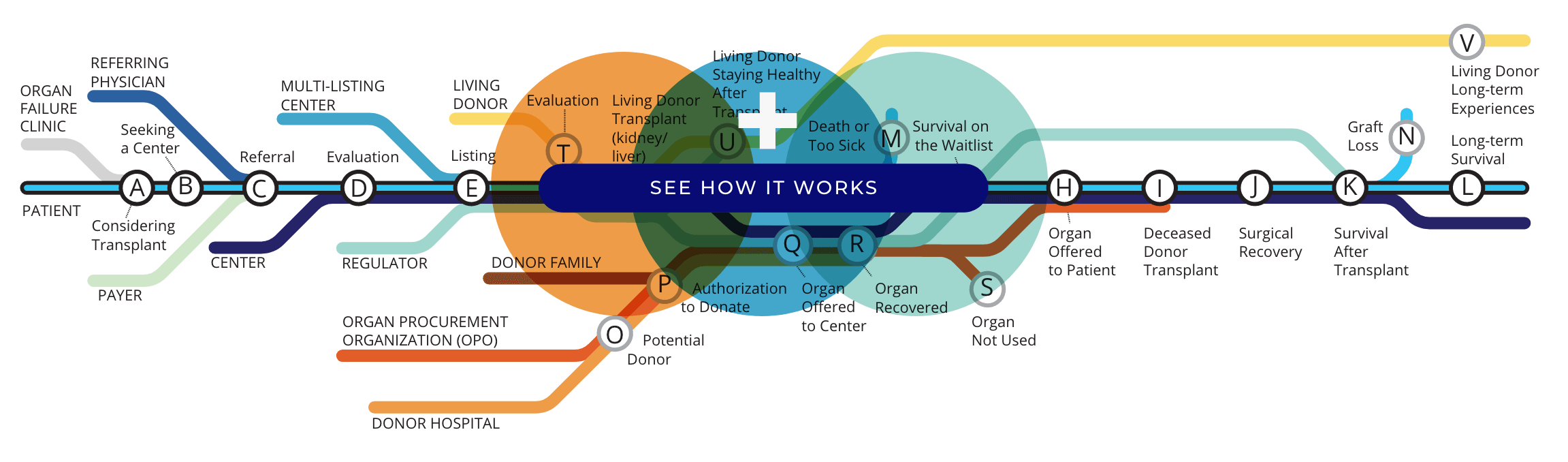
See more about who plays a part in the journey and follow each step in the transplant system using the Interactive System Map.

Accessibility

High Contrast
Text Spacing